Contributed by W. Neil Fraser
Chairman of the Clan Fraser Society of Canada
 Scots have been leaving home for hundreds of years. While the population of Scotland is now around five million, it is estimated that over ninety million people with some Scottish ancestry can now be found worldwide. Wherever they went, Scots adapted to their new country but seldom forgot their heritage. If anything, these expatriates have held onto their Scottishness more enthusiastically than Scots living in Scotland.
The impact of Scots on North America has been considerable. They have integrated into the culture of their adopted countries and contributed to many facets of society, but seldom have they been vocal about their efforts. One might suggest that Scots tend to be "clannish", celebrating their music and customs with one another, but they are often overlooked as an ethnic group in the increasingly multicultural mix of Canada and the United States. To add to the confusion, Scots are usually lumped in with the "English" population when census time comes around, and it is difficult to estimate what a large group Scots really represent in the population of Canada and the United States.
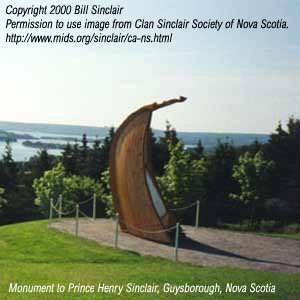
 The impact of Scots on the development of Canada is remarkable. If we accept the claim that Prince Henry Sinclair sailed from the Orkney Islands and landed in what is now Nova Scotia and the coast of New England in 1398, or that Scottish sailors accompanied the early Vikings who landed in Newfoundland in 1010, the influence of Scots may be greater than previously imagined. It is a matter of record that the Fraser Highlanders represented the largest contingent of troops in the British Army of General James Wolfe. The role of the 78th Fraser Highlanders, raised in Scotland in 1757 to fight for the British against France during the Seven Years War, has been well documented. Many Scottish soldiers stayed on after the regiment was disbanded in 1763, married French women, and settled in the new country, leaving numerous descendants, many of whom are totally Francophone, who are proud of their Scottish ancestry.
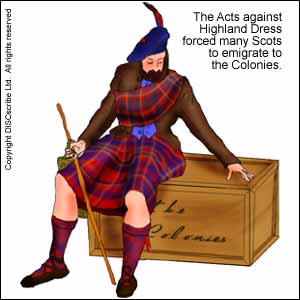
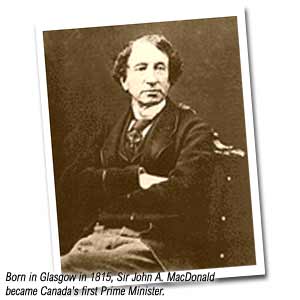
 Worsening economic conditions in the Highlands following the disaster of Culloden in 1746 caused many Highland Scots to emigrate to countries around the world in search of a better life. Scots came in vast numbers to Nova Scotia, Prince Edward Island, New Brunswick, Quebec and Eastern Ontario in the late 18th and early 19th centuries. While conditions were harsh in the new country, the hardy Scots adapted well and soon prospered. Highland Scots were the prime movers in the North West Company of fur traders, based in Montreal. They helped to establish trade routes and explore the vast country where only native peoples had been before. Scots built Montreal, helped to establish banks, insurance companies and merchant trading companies. They established educational institutions, were prominent in medicine, law and the clergy. They included politicians, educators and skilled tradesmen, manufacturers and farmers. Scots excelled in all facets of life in their adopted country which, in 1867, became Canada.
The idea of setting aside one day each year to honour the role of Scots in the early history of Canada was put forward in the late 1980s by Mrs. Jean Watson of Nova Scotia. Mrs. Watson worked tirelessly to solicit support from politicians and Scottish groups in Nova Scotia to establish Tartan Day, eventually gaining enough support for the idea to have it accepted. She did not stop there, and continued to write letters to federal and provincial politicians and Scottish groups across Canada, urging them to adopt Tartan Day. Her persistence paid off, when the Clans & Scottish Societies of Canada endorsed her idea and convinced Ontario MPP Bill Murray to put forward a Private Member's Bill in the Ontario Legislature, to adopt Tartan Day in Ontario, which was passed on December 19, 1991, with unanimous support of all three parties. Other provinces and the Yukon Territories followed with similar resolutions, and all, except Quebec and Newfoundland, now recognize April 6th as Tartan Day.
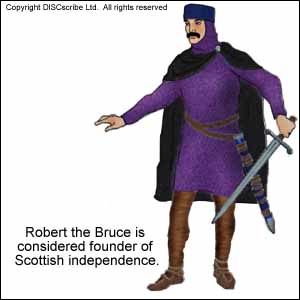
 Efforts have been made to recognize the contribution of Scots by establishing events similar to Tartan Day in other countries, but these events have usually been held on July 1st. Since July 1st is celebrated as Canada Day, the date of April 6th was chosen to celebrate Tartan Day in Canada. The date represents the anniversary of the signing of the Declaration of Arbroath on April 6, 1320, when the Nobles and Freeholders of Scotland came together at Arbroath Abbey under King Robert I of Scotland (The Bruce) to send a petition to Pope John XXII in Rome, declaring the independence of Scotland from English domination following the Battle of Bannockburn in 1314. Since that time, Scotland has been a sovereign nation, now part of the United Kingdom of Great Britain and Northern Ireland. Accordingly, the date of April 6th was chosen to celebrate the role of the independent Scots who helped to discover, conquer, explore, settle and build the country now called Canada.
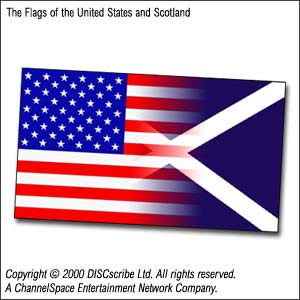
 As Past Chairman of Clans & Scottish Societies of Canada, I represented CASSOC at a conference of the principal Scottish organizations in the United States, convened in March 1996 by the Caledonian Foundation, USA, Inc., in Sarasota, Florida. During that conference I explained why it would have been inappropriate for us to choose July 1st [Canada Day], in the same way that it would be inappropriate for them to choose July 4th [Independence Day]. I also reported on the efforts of CASSOC to establish Tartan Day as a national day to celebrate our Scottish heritage in Canada. The idea was met with great interest by the U.S. participants. The Coalition of U.S. Scottish Organizations established in Sarasota subsequently adopted the idea and, through a U.S. Senate Resolution, April 6th has been proclaimed as Tartan Day in the United States.
Recognition of Tartan Day has been a challenge in the increasingly multicultural fabric of the Canadian population, but many organizations in the Scottish Community continue efforts to bring the attention of the media and public to celebrate Tartan Day on April 6th each year.
 One of these events, which has been very successful, is the Annual Tartan Day Dinner and Scot of the Year Award, which is sponsored by the Scottish Studies Society in support of the Scottish Studies Foundation, established in 1987. Since inception of the annual event to promote Tartan Day, the following prominent Canadians of Scottish origin have been named Scot of the Year: (1993) MGen. Lewis MacKenzie, former Commanding Officer of the U.N. Forces in Sarajevo, Yugoslavia; (1994) Madame Justice, The Hon. Bertha Wilson, retired from the Supreme Court of Canada; (1995) Lloyd Robertson, well known CTV News Anchor; (1996) The Hon. Donald S, Macdonald, former Federal Cabinet Minister and Canadian High Commissioner to Great Britain and Northern Ireland; (1997) Col. The Hon. Henry N. R. Jackman, former Lieutenant-Governor of Ontario; (1998) John Cleghorn, Chairman and CEO of The Royal Bank of Canada; and (1999) Michael MacMillan, Chairman and CEO of Alliance Atlantis Films, the largest film and TV production company in Canada. The person nominated to receive this year's award is Lynton (Red) Wilson, Chairman of Bell Canada Enterprises (BCE). The 8th Annual Tartan Day Dinner and Scot of the Year Award will be held on Tuesday, April 4th, 2000 at the Granite Club, Toronto.
For further information, contact W. Neil Fraser, Dinner Co-Chairman, Tel: (416) 920-6851 Fax: (416) 920-1275
Email Fraser
About the author: W. Neil Fraser was born in Vancouver, British Columbia, before Canadian citizenship was established in 1947 and, although he considers himself a Canadian first and foremost, he is proud of his Scottish heritage, including one grandmother who was half Northern Irish and no doubt imparted her sense of humour to some of her descendants. Neil is the Chair of the Clan Fraser Society of Canada.
Links:
Tartan Day on the Gathering of the Clans
Clan Fraser
Clan Fraser Society of Canada